

X-FOAM™ is an amorphous silicon-oxycarbide foam made by pyrolyzing a foamed, cured proprietary resin in an oxygen-free furnace. Because the ceramic has no crystalline order, heat has no periodic vibrational channels to travel through, so conductivity stays remarkably low while the foam remains stiff and machinable.
A proprietary resin is combined with catalysts, foamed, and cured into a solid plastic, then pyrolyzed in an oxygen-free furnace where it transforms into an amorphous silicon oxycarbide (SiOC) ceramic. The cells are typically half-open and smaller than a millimeter, and the overall porosity is 90–95%.
In crystalline materials, ordered rows of atoms let select vibrational frequencies (phonons) carry heat efficiently. X-FOAM has no long-range order, so those channels don’t exist: thermal conductivity is 10–20× lower than crystalline ceramics of the same type, and only about 1.5× that of air at room temperature.
Room-temperature thermal conductivity of 0.034 W/m·K vs. 0.052 W/m·K for FRCI-12, validated across five replicates at R² = 0.9997.
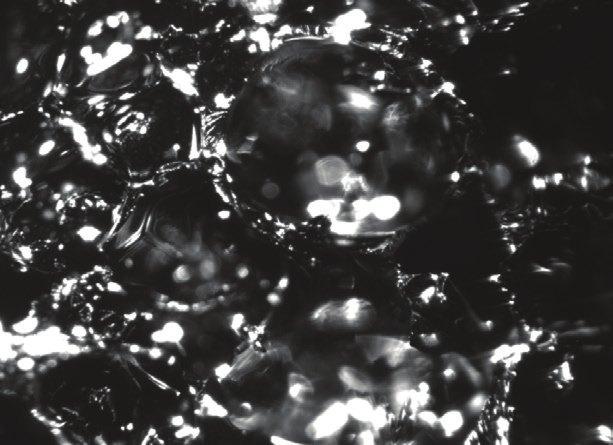
Standard 0.15 g/cc formulation. Typical values; verify for mission-specific design.
| Parameter | SI | Imperial |
|---|---|---|
| Density | 0.15 g/cc | 9.4 lb/ft³ |
| Max operational temp. (air) | 1300 °C | 2370 °F |
| Thermal conductivity | 0.034–0.075 W/m·K | 0.019–0.043 BTU/h·ft·°F |
| Specific heat (25°C) | 850 J/kg·°C | 0.20 BTU/lb·°F |
| Heat capacity / volume | 0.13 MJ/m³·K | 1.9 BTU/ft³·°F |
| Coefficient of thermal expansion | 3.2×10⁻⁶ /°C | 1.8×10⁻⁶ /°F |
| Compressive strength | 2–14 MPa | 300–2000 PSI |
| Pore size (tunable) | 80–1200 µm | 30–250 PPI |
| Machinability | Easy | CNC / lathe / saw |
| Density g/cc | PPI | Compressive PSI | Flexural PSI |
|---|---|---|---|
| 0.15 | 30–120 | 300 | 150 |
| 0.22 | 60–150 | 740 | 270 |
| 0.28 | 100–200 | 1330 | 360 |
| 0.35 | 140–250 | 2000 | 500 |
FRCI-12 alumina-borosilicate tiles have held the reentry space for nearly 50 years. Here is how X-FOAM compares on the parameters that decide a qualification program.
| Parameter | FRCI-12 | X-FOAM | Advantage |
|---|---|---|---|
| Thermal conductivity | 0.052 W/m·K | 0.034 W/m·K | Lower heat leak |
| Density | 0.19–0.23 g/cc | 0.15 g/cc | Lighter |
| Max operating temp. | 1300–1325 °C | 1300 °C | In family |
| Compressive / flex strength | 145 PSI | 250 / 170 PSI | Stiffer, isotropic |
| Waterproofing | RCG + reinjection | Sealed same-material skin | Less refurb |
| Machinability | Friable / artisanal | CNC / lathe / saw | Repeatable |
| Cost per ft² (at scale) | $1,500–3,000 | ~$700 | >50% savings |
| Material | Insulates | Structural | Machinable | Field-repair | Temp ceiling |
|---|---|---|---|---|---|
| Silica tiles (heritage) | ◐ | ○ | ○ | ○ | ~1,260 °C |
| Aerogels | ● | ○ | ○ | ○ | Low |
| Dense refractory ceramics | ○ | ● | ◐ | ○ | High |
| Ceramic fiber blanket | ● | ○ | ○ | ○ | Mid |
| X-FOAM | ● | ● | ● | ● | 1,300 °C+ (1,650 °C+ variants) |
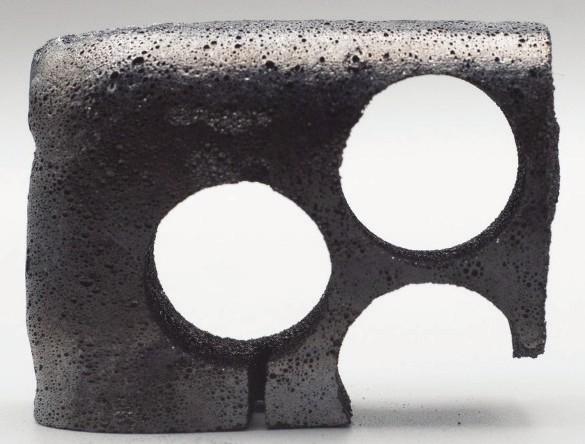
Unlike friable silica tiles that cut like soft chalk and chip at the edges, X-FOAM is stiff. Band saws, drills, hacksaws, and especially lathes and CNC machines cut it exceptionally well, with no lubrication or cooling required. Edges hold strongly, even with small holes, thin cuts, and sharp corners.
Machining produces dark, glassy, chemically inert particles roughly 50–200 µm in size. Masks and eye protection are recommended, but no special collection or disposal is required.
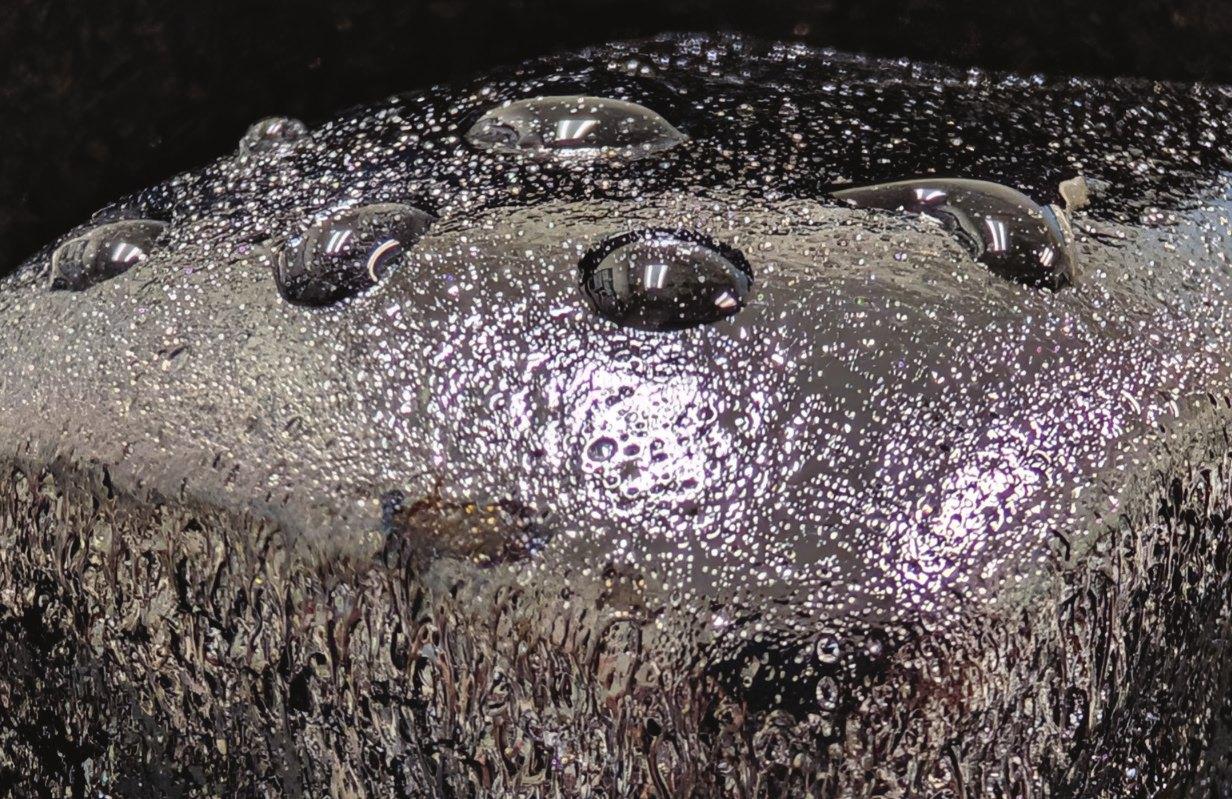
X-FOAM can be made in its green state with a thin outer seal over all surfaces: glassy, and made from the exact same material as the bulk foam. Because it’s inherently part of the piece, minimal CTE mismatch occurs and it doesn’t easily crack or delaminate. It’s also far thinner than RCG (≈10 µm), so the added mass is negligible.
The result: tiles are protected from launch-pad moisture and generally require no refurbishment before the next mission.
X-FOAM holds its shape and sheds no material while its face glows incandescent. See the thermal-shock, coated, and insulation tests, plus a FOX 35 Orlando segment.
Request a sample and put X-FOAM in front of your engineers. Tell us where you think it fits and the team will follow up by email.